Home / Kitchen Planning Notes / Choosing a Style
PLANNING NOTE — FIVE STYLES
CHOOSING A KITCHEN STYLE FOR YOUR HOME.
There are five styles, and all five use the same three materials. This note compares Modern, Classic, Scandinavian, Loft and Neoclassical on three things: character, typical materials and the rooms each one suits. Then come five questions that narrow the choice before your free measurement visit.
CUT LIST — STYLE INDEX
01 MODERN
Flat fronts, stone, slim metal
02 CLASSIC
Panelled fronts, warm timber
03 SCANDINAVIAN
Pale timber, calm and simple
04 LOFT
Metal, stone, raw texture
05 NEOCLASSICAL
Classic proportion, lighter detail
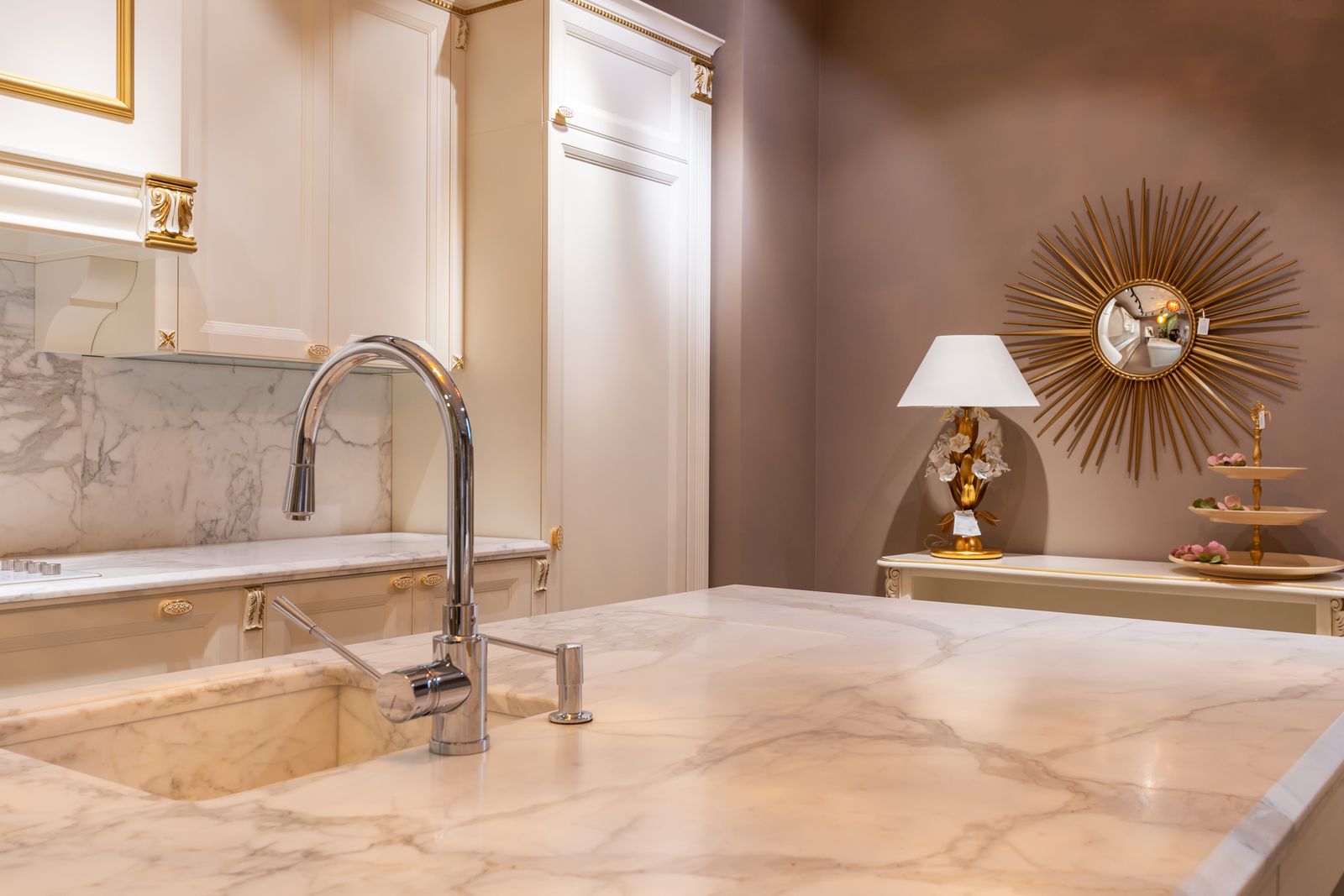
PART A — REFERENCE PHOTO: LIGHT CABINETRY, MARBLE ISLAND, GOLD DETAILS
PART A — HOW TO READ A STYLE
A
A STYLE IS A SET OF DECISIONS ABOUT FRONTS, BENCHTOPS AND HARDWARE.
Every Kitchen Atelier kitchen is made to measure in wood, stone and metal. What separates one style from another is how those materials are used. It comes down to the profile and finish of the cabinet front, the colour and edge of the benchtop, and the handles or knobs on the doors and drawers.
Read each style below on the same three lines: character, typical materials and the rooms it suits. To see the samples themselves, go to Materials: Fronts, Benchtops & Hardware or the note on pairing wood, stone and metal.
PART B — STYLES
01
MODERN
CHARACTER
Clean lines, flat fronts and long, unbroken benchtops. Handles are slim, recessed or left off entirely.
TYPICAL MATERIALS
Lacquered or veneered fronts, a stone benchtop with a thin edge, and brushed or black metal.
SUITS
Open-plan apartments and living areas where the kitchen shares the room.
02
CLASSIC
CHARACTER
Framed and panelled fronts, visible joinery detail and a feeling of weight and permanence.
TYPICAL MATERIALS
Warm timber finishes, a stone benchtop with a profiled edge, and traditional knobs and cup pulls in metal.
SUITS
Period homes, and separate kitchens with room for detail.
03
SCANDINAVIAN
CHARACTER
Light, calm and simple, with nothing added for show.
TYPICAL MATERIALS
Pale natural timber such as oak, matt white fronts, a light stone benchtop and very little visible metal.
SUITS
Smaller rooms, and kitchens where you want to make the most of daylight.
04
LOFT
CHARACTER
Industrial and direct, with materials left honest and on show.
TYPICAL MATERIALS
Dark or matte fronts, black steel, dark or concrete-look stone and open shelving.
SUITS
Open, high-ceilinged spaces, conversions and rooms with exposed brick or concrete.
05
NEOCLASSICAL
CHARACTER
Classic proportions with lighter, more restrained detailing.
TYPICAL MATERIALS
Slim-framed fronts in pale lacquer, marble-look stone and brass hardware.
SUITS
Homes that want a sense of tradition without the weight of a fully Classic kitchen.

PART B — REFERENCE PHOTO: MATTE BLACK FRONTS, BLACK TAP
PART C — FIVE QUESTIONS
NARROW IT DOWN.
Answer these five questions before the designer arrives. Together they help shorten the list of styles worth considering, and the room itself helps settle the rest.
01 — Does the kitchen share the room?
In open-plan living, Modern or Scandinavian sits quietly beside the sofa. A separate kitchen can carry the detail of Classic or Neoclassical.
02 — What does the building already say?
Cornices and panelled doors lean Classic or Neoclassical. Plain walls, brick or concrete lean Loft or Modern.
03 — How much daylight reaches the bench?
Low light calls for pale timber and light fronts. A bright room can hold dark fronts and black metal.
04 — Which material should lead?
Wood, stone or metal. Pick the one you want to see and touch every day, and let the other two support it.
05 — Handles, knobs or none?
Hardware shifts a style fast. A brass knob pulls Modern towards Neoclassical, and black steel pulls it towards Loft.
Write your answers down and bring them along. The visit preparation checklist covers what else to have ready.
PART D — FROM STYLE TO DRAWING
MIX TWO STYLES IF THE ROOM ASKS FOR IT.
A style is a starting point, not a rule. Scandinavian timber with Loft hardware works. So do Modern lines with Neoclassical fronts. At the free measurement visit, a Kitchen Atelier designer measures the room and turns your direction into a 3D design. From there, every panel is cut to measure in our own workshop.