
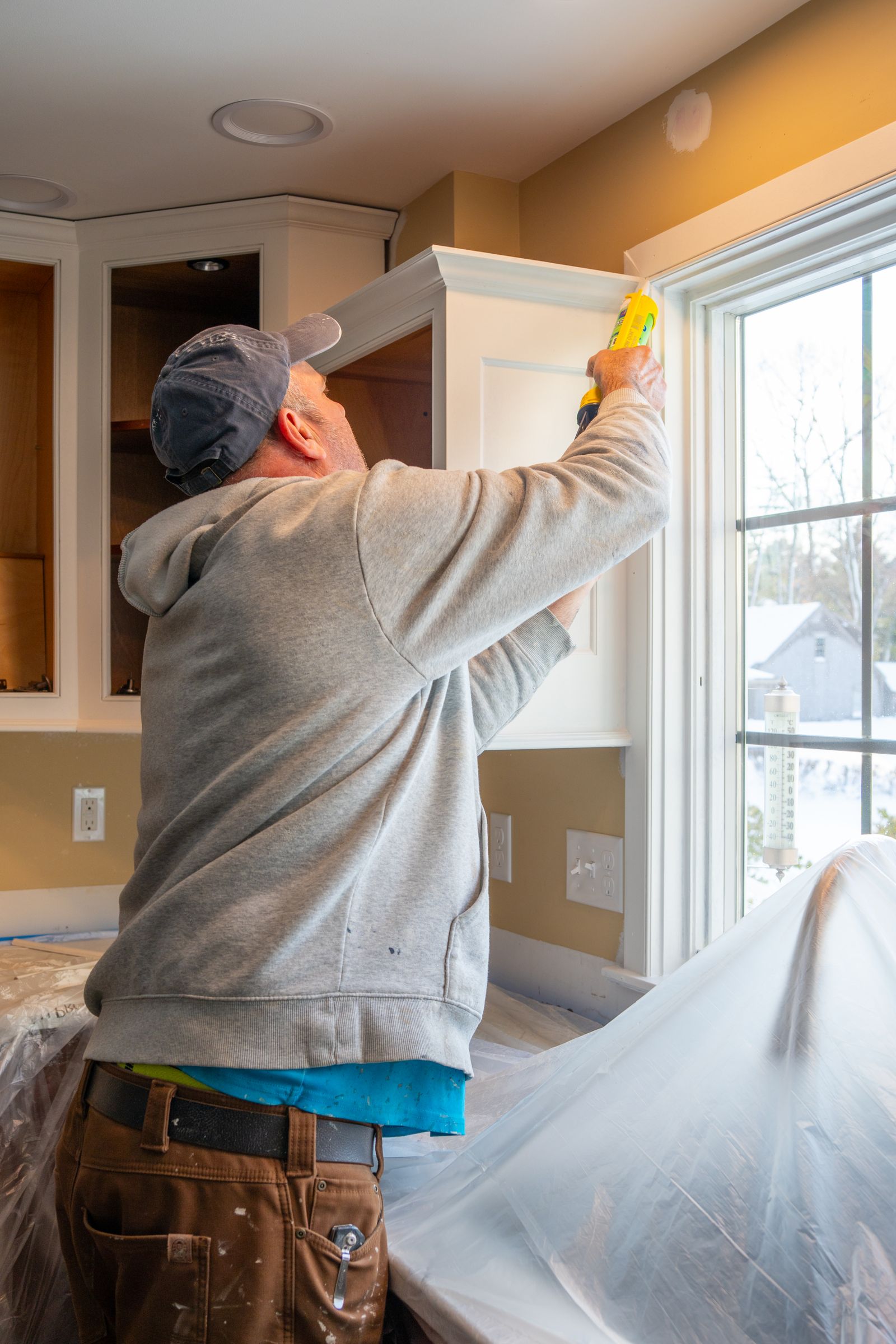
Reference photo: finishing work around kitchen cabinetry, with the room protected.
When old cabinets or a splashback come off a kitchen wall, what’s left behind is rarely ready for paint. Ivan Bodnar repairs walls and ceilings, installs new plasterboard where needed and prepares the surface so the new finish has something sound to sit on.
Wall cabinets are fixed through the lining. Splashback tiles are bonded to it. Taking either off can leave screw holes, torn paper facing, adhesive residue, broken corners and sections of board that are soft or loose.
Ceilings show their own marks: old rangehood cut-outs, redundant fittings and patches where previous work was never quite finished. Some of this is visible at the on-site assessment. Some only appears once the old joinery is out, because an inspection cannot reveal every concealed issue. For more on that, read What May Be Behind the Cabinets.
Where the board is sound and the damage is local, such as fixing holes, small tears or minor dents, it’s usually practical to cut back, patch, set and sand rather than replace the sheet.
Where a section is moisture-affected, crumbling or badly torn after tile removal, new plasterboard is often the sounder option. If moisture is the cause, the source needs to be found first, or the new sheet will go the same way.
Joints, patches and new sheets are finished and sanded so they don’t show through the topcoat. Surface preparation is where a kitchen wall either looks finished or looks repaired. See Interior & Exterior Painting.
Plasterboard is a lining. Removing or altering a wall, changing framing or opening up a load-bearing section is structural work, and it needs an appropriate practitioner. Ivan does not provide structural engineering or architecture.
Plumbing and electrical changes behind a new wall, such as relocated power points or moved water lines, are done by appropriately licensed specialists before the lining is closed up. Ivan coordinates that sequence. He does not do the regulated work himself, and asbestos removal is not offered. If older linings in a flat or house raise that question, an appropriate practitioner needs to assess them first. See Who Does What: Ivan and Licensed Trades.
→ Moisture source found — not just the stain painted over.
→ Services in place — licensed trades finished behind the lining.
→ Fixing points planned — new cabinets and rails need something solid to fix to.
→ Room protected — benchtops, floors and openings covered against dust.
→ Scope in writing — repairs and new sheets listed in the written quotation.
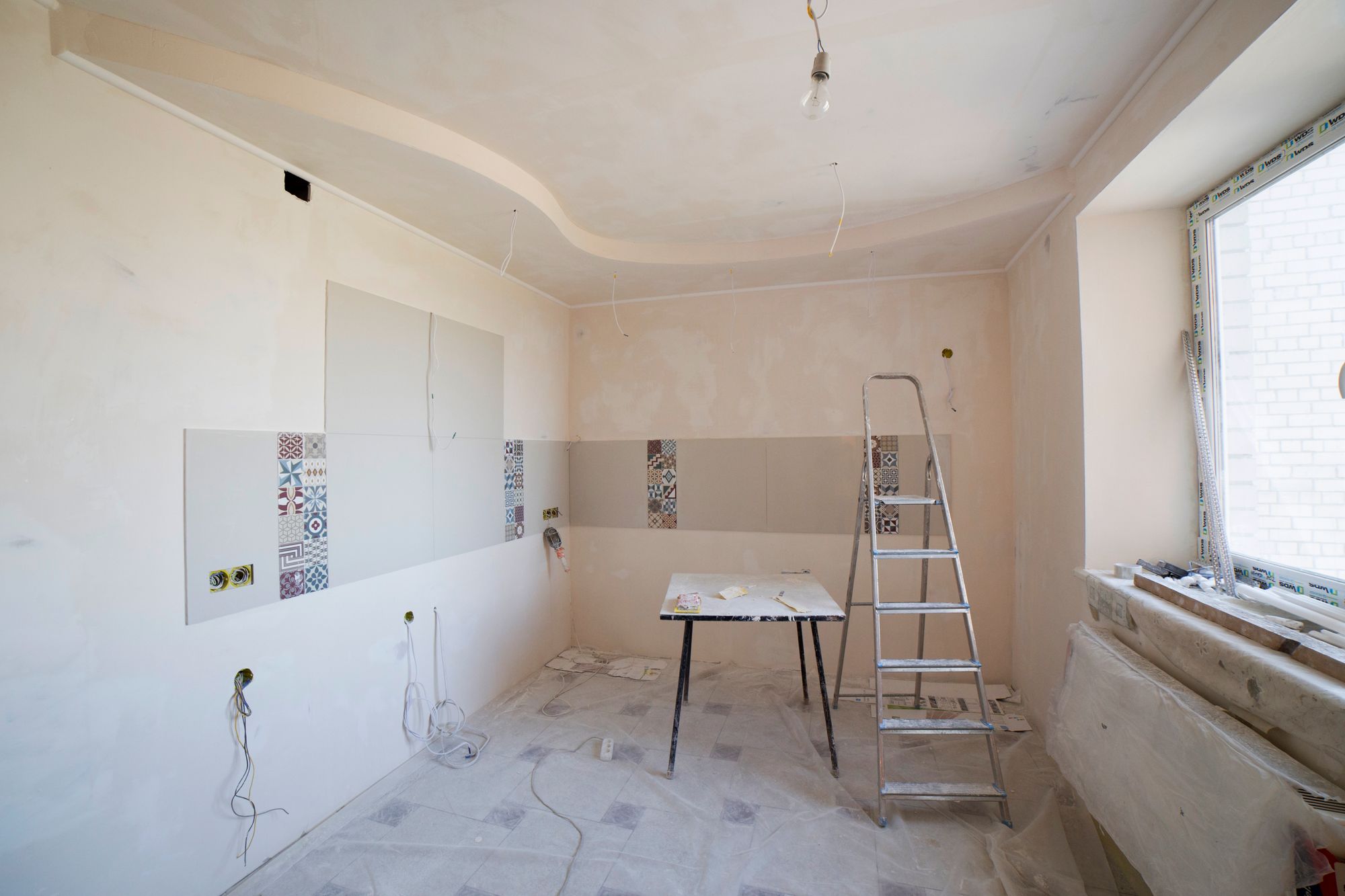
Reference photo: a kitchen mid-renovation, with wiring still exposed and tiling unfinished. This is the stage when licensed trades finish their work before the wall is lined or painted.
Plastering here is related work within a kitchen renovation in St Kilda. It usually comes up alongside surface preparation and splashback tiling. If your walls need attention after the old kitchen comes out, Request a Kitchen Renovation Quote →